table of contents
- Key Features of AI-Powered Weighing Systems
- Automatic Product Recognition: Giving Weighing Scales “Eyes”
- Fast and Accurate Weighing: 0.1-Second Decisions with 99% Accuracy
- Real-Time Pricing and Checkout: From Weighing to Payment, Seamlessly
- Support for Multiple Product Categories: One Scale, Endless Items
- User-Friendly Self-Service Experience: Easy for Customers and Staff
- Why AI-Powered Weighing Matters
- Key Features of AI-Powered Weighing Systems
Key Features of AI-Powered Weighing Systems
Modern retail is moving fast—and traditional weighing methods can no longer keep up.
AI-powered weighing systems combine computer vision and intelligent algorithms to automate product identification, speed up checkout, and improve the self-service experience.
Below are the key features that make AI-powered weighing a game changer for supermarkets, grocery stores, and convenience retailers.
Automatic Product Recognition: Giving Weighing Scales “Eyes”
Imagine placing a bag of apples on a scale, and before you even touch the screen, it already shows:
“Fuji Apples – $2.99/kg.”
That’s the power of automated product identification.
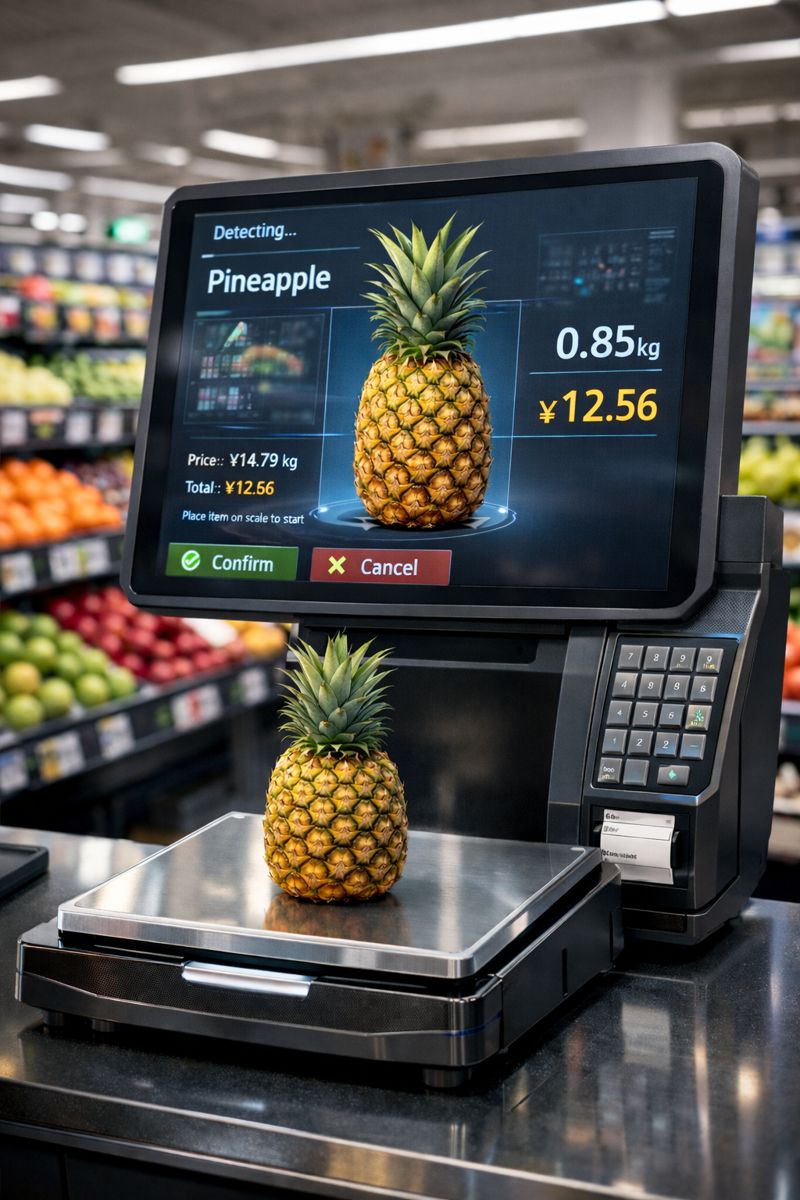
AI-powered weighing systems use deep learning and computer vision to recognize products by analyzing their color, shape, texture, and visual details. Even items inside semi-transparent plastic bags—such as packaged vegetables or loose candies—can be accurately identified.
What makes this technology especially impressive is its ability to tell apart similar-looking products. For example, premium-grade apples and standard apples may look almost identical to the human eye, but the AI can distinguish them by subtle label details or surface features.
Behind this capability is a pre-trained product database, usually including:
- 200+ fresh produce items (fruits, vegetables, meat, seafood)
- 2,000+ retail products such as nuts, snacks, and bulk foods
Together, these cover over 80% of non-barcoded items found in typical supermarkets.
When new products arrive, training is simple and fast:
- Place the item on the scale
- The system automatically captures an image
- Confirm product information
No technical skills required. With just one image, the system learns a new product—perfect for seasonal items like persimmons in autumn or citrus fruits in winter.
Fast and Accurate Weighing: 0.1-Second Decisions with 99% Accuracy
Speed and accuracy are where AI-powered weighing truly shines.
Traditional manual PLU input usually takes 3–5 seconds per item. In contrast, AI weighing systems deliver results in just 0.1 seconds—faster than a blink.
This makes a big difference during peak hours:
- Shorter queues
- Higher throughput per weighing station
- Smoother customer flow
Accuracy is just as impressive. The correct product appears in the recommendation list with up to 99% probability, and over time, the system often outputs a single correct result with more than 90% accuracy.
The AI focuses on fine visual details:
- Banana curvature and peel spots
- Fat and muscle texture in meat
- Surface patterns on fruits and vegetables
Even better, this performance is achieved on standard, cost-effective hardware, without requiring high-end processors. Retailers don’t need to upgrade their equipment to enjoy reliable results.
For stores, this means:
- Fewer pricing errors
- Less staff training
- Fewer customer complaints
Real-Time Pricing and Checkout: From Weighing to Payment, Seamlessly
AI-powered weighing systems do more than recognize products—they connect the entire weighing, pricing, and checkout process.
Two common deployment modes support different retail formats:
Label Printing Mode
Ideal for large supermarkets.
After identification, the system prints a label with weight, price, and PLU code. Customers attach the label and scan it at checkout, keeping weighing and payment areas organized.
Checkout Scale Mode
Perfect for convenience stores.
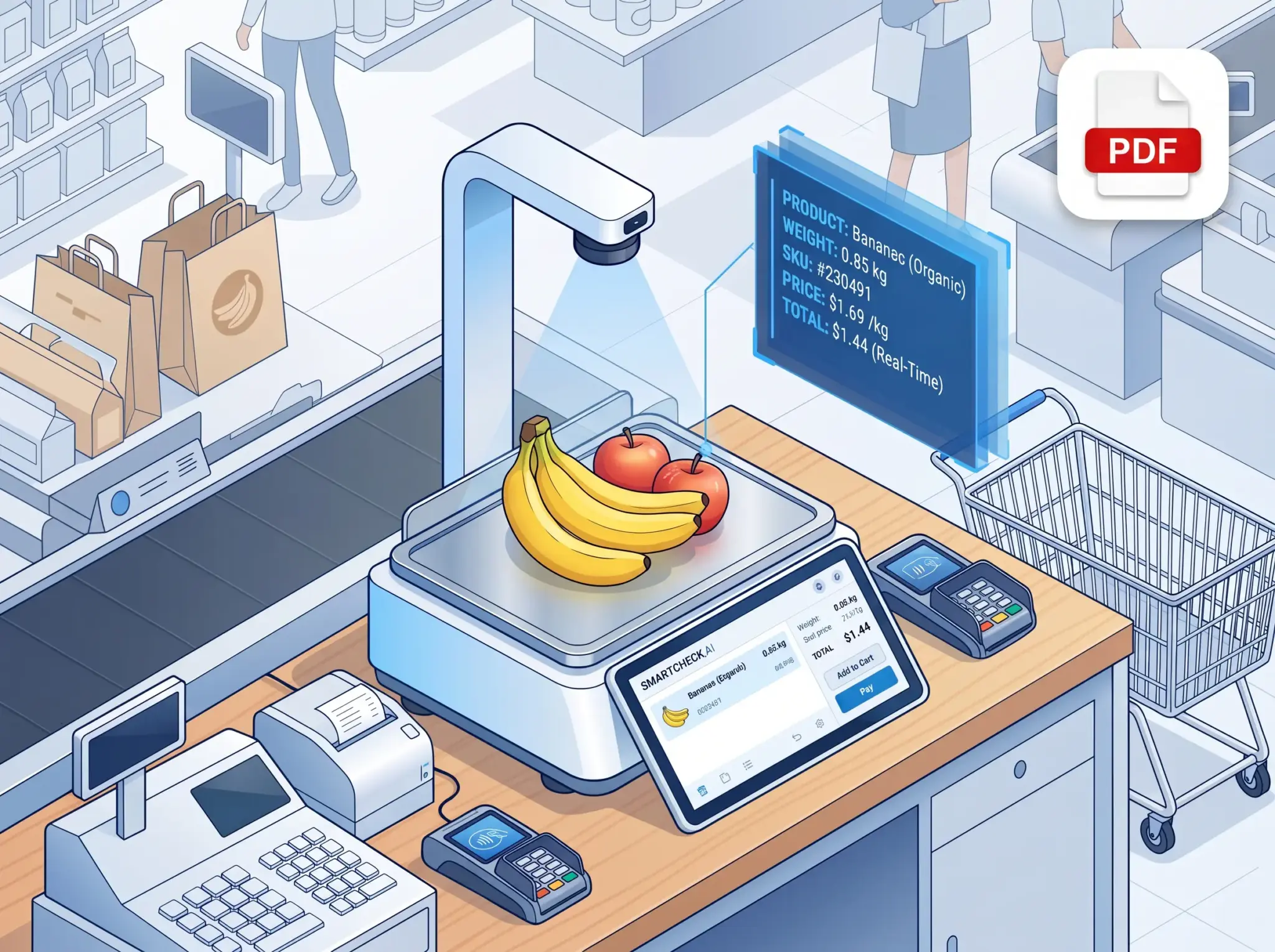
The product is recognized, priced, and synced directly with the POS system. Customers can pay immediately—no labels, no extra steps.
In both cases, real-time data synchronization is key:
- Price changes update automatically
- Weighing data syncs with inventory systems
- Headquarters can push updates to all stores instantly
This prevents pricing inconsistencies and improves overall store operations.
Support for Multiple Product Categories: One Scale, Endless Items
An AI-powered weighing system can recognize far more items than any human cashier could remember.
Supported categories typically include:
- Fresh produce: vegetables, fruits, seafood, meat—even muddy ginger or shell-on chestnuts
- Bulk snacks and dry goods: nuts, candies, cookies, seeds
- Variations under one product code: different colors, packaging styles, or quality grades
With databases supporting tens of thousands of SKUs, these systems easily exceed the needs of most retail stores.
They are also built for real-world complexity:
- Overlapping items
- Partial occlusion
- Changing lighting conditions
Recognition remains stable and reliable.
User-Friendly Self-Service Experience: Easy for Customers and Staff
The best technology feels invisible—and that’s exactly the goal of self-service weighing features.
For customers, the process is simple:
- Place the item
- Confirm on screen
- Print label or pay
Large images and clear text make the interface easy for all age groups. Stores using AI self-service weighing often see higher customer satisfaction and fewer complaints about long queues.
For staff, maintenance is minimal:
- Offline operation ensures stability even without internet
- Shared learning allows one store to train new products for all locations
- New item training takes minutes, not hours
This low barrier to use makes AI-powered weighing suitable for everything from premium supermarkets to small neighborhood stores—even in areas with limited connectivity.
Why AI-Powered Weighing Matters
With automated product identification, ultra-fast recognition, and intuitive self-service weighing features, AI-powered weighing systems are transforming a once-frustrating step into a smooth and efficient experience.
For retailers, it’s not just a technology upgrade—it’s a smarter way to reduce costs, improve accuracy, and enhance customer satisfaction.