
table of contents
- AI Checkout Loss Prevention: The Complete Guide for Modern Retail
- What Is AI Checkout Loss Prevention?
- Why Checkout Loss Is a Growing Problem in Retail
- How AI Checkout Loss Prevention Works
- AI Checkout Loss Prevention vs Traditional Loss Prevention
- Key Use Cases for AI Checkout Loss Prevention
- Business Impact and ROI of AI Checkout Loss Prevention
- Privacy, Compliance, and Responsible AI Use
- Deployment and Integration Considerations
- How to Choose the Right AI Checkout Loss Prevention Solution
- The Future of Checkout Loss Prevention
- AI Checkout Loss Prevention: The Complete Guide for Modern Retail
AI Checkout Loss Prevention: The Complete Guide for Modern Retail
What Is AI Checkout Loss Prevention?
AI checkout loss prevention refers to the use of artificial intelligence—primarily computer vision and behavior analysis—to detect, prevent, and reduce losses that occur during the checkout process, especially at self-checkout and assisted checkout counters.
Unlike traditional loss prevention methods that rely on manual monitoring, fixed rules, or post-transaction audits, AI-powered checkout loss prevention systems analyze real-time checkout behavior through video streams and transaction data to identify abnormal or suspicious activities before losses occur.
As self-checkout adoption increases across grocery stores, convenience stores, and retail chains, checkout-related shrinkage has become one of the fastest-growing sources of retail loss—making AI-based checkout loss prevention a critical solution for modern retailers.
🔗How AI Powered Checkout Loss Prevention Is Transforming Retail
Why Checkout Loss Is a Growing Problem in Retail
Retail shrinkage has existed for decades, but checkout loss has escalated sharply with the rise of self-checkout systems.
Common checkout-related loss scenarios include:
- Skip scanning items
- Barcode switching
- Mis-scanning produce or fresh food
- Item substitution
- Cashier-assisted errors or intentional fraud
Traditional loss prevention tools struggle at checkout because they are:
- Reactive rather than proactive
- Highly dependent on staff attention
- Prone to false positives
- Difficult to scale across hundreds or thousands of tills
As a result, retailers increasingly turn to AI checkout loss prevention solutions to regain control over this critical loss point.
To understand the driving factors behind this shift, read Reasons 🔗Behind the Rising Demand for AI-Powered Loss Prevention.
How AI Checkout Loss Prevention Works
AI checkout loss prevention systems operate by combining computer vision, machine learning, and real-time behavioral analysis.
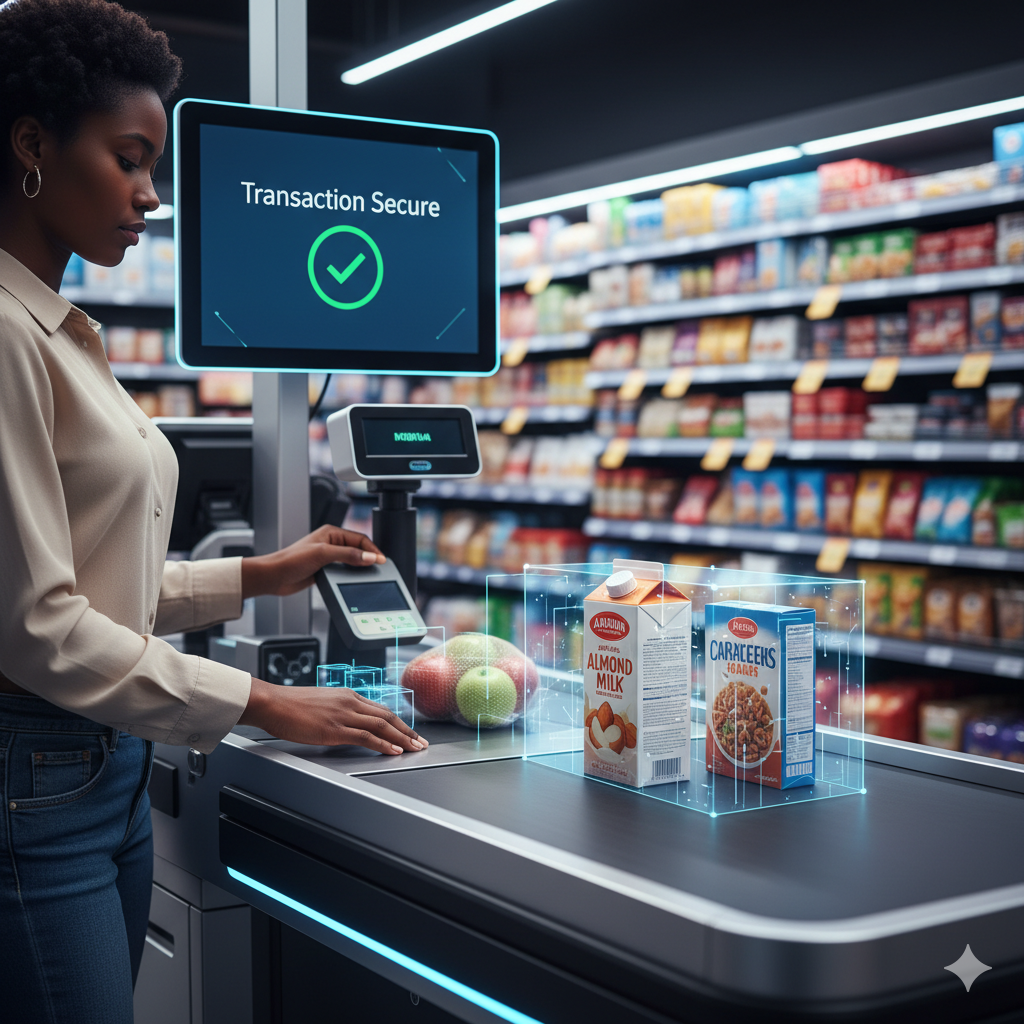
Computer Vision at Checkout
Cameras positioned at checkout counters continuously analyze item handling, scanning actions, and customer behavior.
Unlike facial recognition systems, checkout-focused AI models are trained to recognize objects, movements, and workflows, not identities.
Behavior-Based Detection
Instead of relying on rigid rules, AI models learn normal checkout behavior patterns and detect anomalies such as:
- Items passing the scanner without being scanned
- Mismatches between scanned items and visual input
- Suspicious hand movements or item swaps
Real-Time Alerts
When abnormal behavior is detected, the system can:
- Trigger real-time alerts for staff
- Prompt on-screen reminders
- Log video evidence for later review
This real-time capability is what differentiates AI-based checkout loss prevention from traditional post-event auditing systems.
AI Checkout Loss Prevention vs Traditional Loss Prevention
Traditional Methods
AI Checkout Loss Prevention
Manual monitoring
Automated real-time analysis
Rule-based detection
Behavior-based intelligence
High labor dependency
Scales without extra staff
High false alarm rate
Continuously self-optimizing
Limited to post-review
Prevents loss before completion
AI-powered checkout loss prevention does not replace existing systems such as EAS or POS controls—it enhances them by closing blind spots at checkout.
Key Use Cases for AI Checkout Loss Prevention
Self-Checkout Loss Prevention
Self-checkout lanes are the primary application for AI checkout loss prevention.
AI systems monitor each transaction to ensure scanned items match what is visually handled, significantly reducing intentional and unintentional losses.
Assisted Checkout and Cashier Monitoring
AI can also support cashier-assisted lanes by detecting:
- Repeated mis-scans
- Abnormal transaction patterns
- Collusion risks
Grocery, Convenience, and Fresh Food Retail
AI checkout loss prevention is particularly effective in environments with:
- High SKU variety
- Fresh produce without barcodes
- High transaction volumes
- Peak-hour congestion
Business Impact and ROI of AI Checkout Loss Prevention
Retailers adopting AI checkout loss prevention typically focus on three measurable outcomes:
Shrink Reduction
By detecting loss at the moment it occurs, AI systems significantly reduce checkout-related shrinkage without increasing friction for honest customers.
Operational Efficiency
AI reduces the need for constant staff supervision at checkout, allowing employees to focus on customer service rather than monitoring.
Faster and Smoother Checkout
When losses are prevented intelligently, retailers can maintain fast self-checkout experiences without adding physical barriers or excessive prompts.
Privacy, Compliance, and Responsible AI Use
Modern AI checkout loss prevention solutions are designed with privacy and compliance in mind.
Key characteristics include:
- No facial recognition
- No biometric identification
- Focus on item and behavior recognition
- Local or on-device processing options
- GDPR- and privacy-aligned architectures
These features ensure AI checkout loss prevention can be deployed globally without increasing legal or compliance risk.
Deployment and Integration Considerations
Retailers evaluating AI checkout loss prevention should consider:
- Compatibility with existing POS systems
- Support for edge AI or local processing
- Ease of integration with current checkout hardware
- Scalability across store networks
Solutions that operate as lightweight AI layers—without requiring major hardware replacement—offer faster deployment and lower total cost of ownership.
How to Choose the Right AI Checkout Loss Prevention Solution
When selecting an AI checkout loss prevention platform, retailers should evaluate:
- Detection accuracy in real-world conditions
- Ability to operate in real time
- Transparency of alert logic
- Privacy and compliance safeguards
- Integration effort and deployment speed
The most effective solutions combine high accuracy, low operational friction, and clear business impact.
The Future of Checkout Loss Prevention
As checkout environments continue to evolve, AI checkout loss prevention will move from an optional enhancement to a core retail infrastructure component.
By combining intelligent perception, real-time response, and privacy-first design, AI-powered checkout loss prevention enables retailers to protect revenue while maintaining fast, customer-friendly checkout experiences.