
table of contents
Why Retailers Are Switching to AI Loss Prevention Systems in 2026
Retail shrinkage has become one of the most pressing challenges facing retailers worldwide. As labor costs continue to rise and self-checkout adoption accelerates, traditional loss prevention methods are struggling to keep pace with increasingly sophisticated theft techniques and operational vulnerabilities.
According to industry reports, retail shrinkage costs the global retail industry hundreds of billions of dollars annually(Retail Technology Report). For many supermarket chains, convenience stores, and specialty retailers, even a 1% increase in shrinkage can significantly erode already thin profit margins.
As a result, more retailers are turning to AI loss prevention systems to improve security, reduce losses, and increase operational efficiency.
In this guide, we’ll explore why AI-powered loss prevention is rapidly becoming an essential technology for modern retailers and how it delivers measurable business value.
1. What Is AI Loss Prevention?
AI loss prevention refers to the use of computer vision, machine learning, and real-time video analytics to identify suspicious activities, operational errors, and theft-related behaviors across retail environments.
Unlike traditional Electronic Article Surveillance (EAS) systems that only react when products leave the store, AI loss prevention continuously monitors customer and employee activities throughout the shopping journey.
Modern AI systems can detect:
- Missed scans at self-checkout
- Barcode switching
- Product substitution fraud
- Sweethearting transactions
- Employee theft
- Suspicious return activities
- Inventory handling violations
By identifying risks in real time, retailers can intervene before losses occur.
2. Why Traditional Loss Prevention Methods Are Failing
Rising Labor Costs
Traditional loss prevention programs rely heavily on manual monitoring and security personnel.
However, retail labor costs continue to increase while operating margins remain under pressure. Hiring additional staff to monitor self-checkout areas or conduct loss prevention audits is often unsustainable.
At the same time, human monitoring is inherently limited by fatigue, distraction, and inconsistent execution.
Limited Visibility from Traditional EAS Systems
EAS systems provide a basic layer of theft deterrence but cannot identify the cause of shrinkage.
For example, EAS cannot detect:
- Missed scanning events
- Internal theft
- Fraudulent returns
- Process violations
- Product switching
As self-checkout adoption grows, these limitations become increasingly costly.
Reactive Instead of Preventive
Most traditional solutions identify losses after the incident has occurred.
By the time video footage is reviewed and evidence is collected, the opportunity to recover losses has often disappeared.
Retailers need a proactive approach rather than a reactive one.
3. Seven Benefits of AI Loss Prevention Systems
1. Real-Time Theft Detection
AI systems analyze customer behavior instantly and can trigger alerts within milliseconds.
This enables staff to intervene before losses occur rather than investigating incidents after the fact.
2. Reduced Self-Checkout Shrinkage
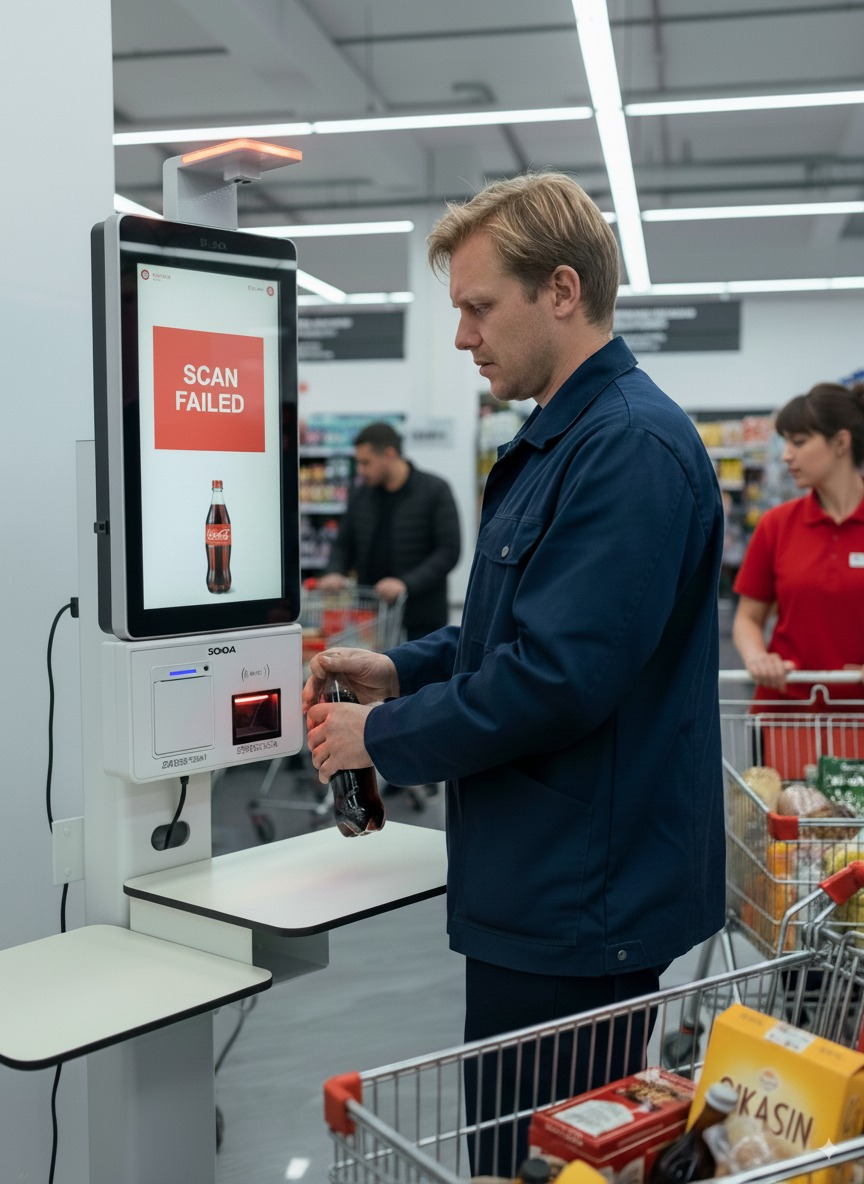
Self-checkout shrinkage remains one of the fastest-growing sources of retail loss.
AI can identify:
- Non-scans
- Partial scans
- Item switching
- Incorrect product selection
This significantly reduces revenue leakage while maintaining a frictionless checkout experience.
3. Higher Detection Accuracy
Modern computer vision models can distinguish between normal shopping behavior and suspicious activity with far greater accuracy than traditional rule-based systems.
This helps minimize false positives and reduces unnecessary customer confrontations.
4. Lower Operational Costs
By automating monitoring tasks, retailers can reduce reliance on manual supervision and optimize labor allocation.
Store teams can focus on customer service instead of constant surveillance.
5. Full-Store Coverage
AI loss prevention is not limited to store exits.
The technology can monitor:
- Self-checkout zones
- Traditional checkout lanes
- Stockrooms
- Receiving areas
- Sales floors
- Return counters
This creates a comprehensive shrinkage prevention strategy.
6. Actionable Business Intelligence
Beyond security, AI generates valuable operational insights.
Retailers can identify:
- High-risk locations
- Frequent loss patterns
- Employee training opportunities
- Process inefficiencies
This transforms loss prevention from a cost center into a business optimization tool.
7. Strong Return on Investment
Many retailers recover implementation costs within the first year through:
- Reduced shrinkage
- Lower labor costs
- Improved operational efficiency
- Better inventory accuracy
4. AI Loss Prevention vs Traditional EAS Systems
Feature | Traditional EAS | AI Loss Prevention |
Detects theft at exit | Yes | Yes |
Detects missed scans | No | Yes |
Detects employee theft | Limited | Yes |
Real-time behavioral analysis | No | Yes |
Self-checkout monitoring | No | Yes |
Operational analytics | No | Yes |
False alarm reduction | Limited | High |
For retailers seeking comprehensive shrinkage reduction, AI provides significantly broader coverage than traditional EAS solutions.
5. AI Loss Prevention vs RFID
Retailers often compare AI and RFID technologies when evaluating loss prevention investments.
While RFID improves inventory visibility, AI focuses on behavior recognition and transaction validation.
Capability | RFID | AI Loss Prevention |
Inventory tracking | Excellent | Moderate |
Theft behavior detection | Limited | Excellent |
Self-checkout monitoring | Limited | Excellent |
Product substitution detection | No | Yes |
Employee theft detection | Limited | Yes |
Customer behavior analysis | No | Yes |
Many large retailers now combine RFID and AI technologies to achieve maximum protection.
6. Case Study: Reducing Self-Checkout Shrinkage by 42%
Challenge
A regional supermarket chain experienced rising shrinkage levels after introducing self-checkout kiosks.
Loss rates increased from 0.4% to over 1.2%, creating significant revenue leakage.
Solution
The retailer deployed an AI loss prevention solution that monitored:
- Scanning behavior
- Product recognition
- Checkout transaction consistency
Results
Within the first year:
- Shrinkage reduced by 42%
- Detection accuracy exceeded 90%
- Customer disputes decreased significantly
- ROI achieved within 8 months
The retailer expanded deployment across additional locations following the pilot program.
7. How to Choose an AI Loss Prevention Solution
Not all AI solutions offer the same capabilities.
When evaluating vendors, retailers should consider:
Detection Accuracy
What is the actual false-positive rate?
Self-Checkout Coverage
Can the system identify:
- Missed scans
- Barcode switching
- Product substitution
Deployment Requirements
Can the solution work with existing cameras and infrastructure?
Integration Capabilities
Does it integrate with:
- POS systems
- Inventory platforms
- ERP systems
- Video management systems
Scalability
Can the solution support future store expansion?
ROI Expectations
How quickly can the retailer recover implementation costs?
8. Signs Your Retail Business Needs AI Loss Prevention
Your organization should consider AI loss prevention if:
- Self-checkout shrinkage exceeds 0.5%
- Labor costs continue to rise
- Inventory discrepancies are increasing
- Existing EAS systems generate excessive false alarms
- Multiple stores are difficult to monitor consistently
- Employee theft and process losses remain difficult to identify
If several of these challenges apply to your business, AI loss prevention may provide significant operational and financial benefits.
9. Frequently Asked Questions
What is AI loss prevention?
AI loss prevention uses computer vision and machine learning to identify theft, fraud, and operational errors in real time.
Can AI detect self-checkout fraud?
Yes. Modern AI systems can detect missed scans, item switching, barcode fraud, and other checkout-related losses.
How accurate are AI loss prevention systems?
Accuracy varies by vendor, but leading solutions can achieve detection rates above 90% while maintaining low false-positive rates.
What is the ROI of AI loss prevention?
Many retailers achieve ROI within 6–12 months through shrinkage reduction and labor optimization.
Is AI loss prevention better than EAS?
AI and EAS serve different purposes. AI provides broader behavioral analysis and operational visibility, while EAS primarily acts as an exit-based theft deterrent.