table of contents
Retail Checkout Loss Prevention Upgrade: Typical Application Cases of AI Checkout Loss Prevention
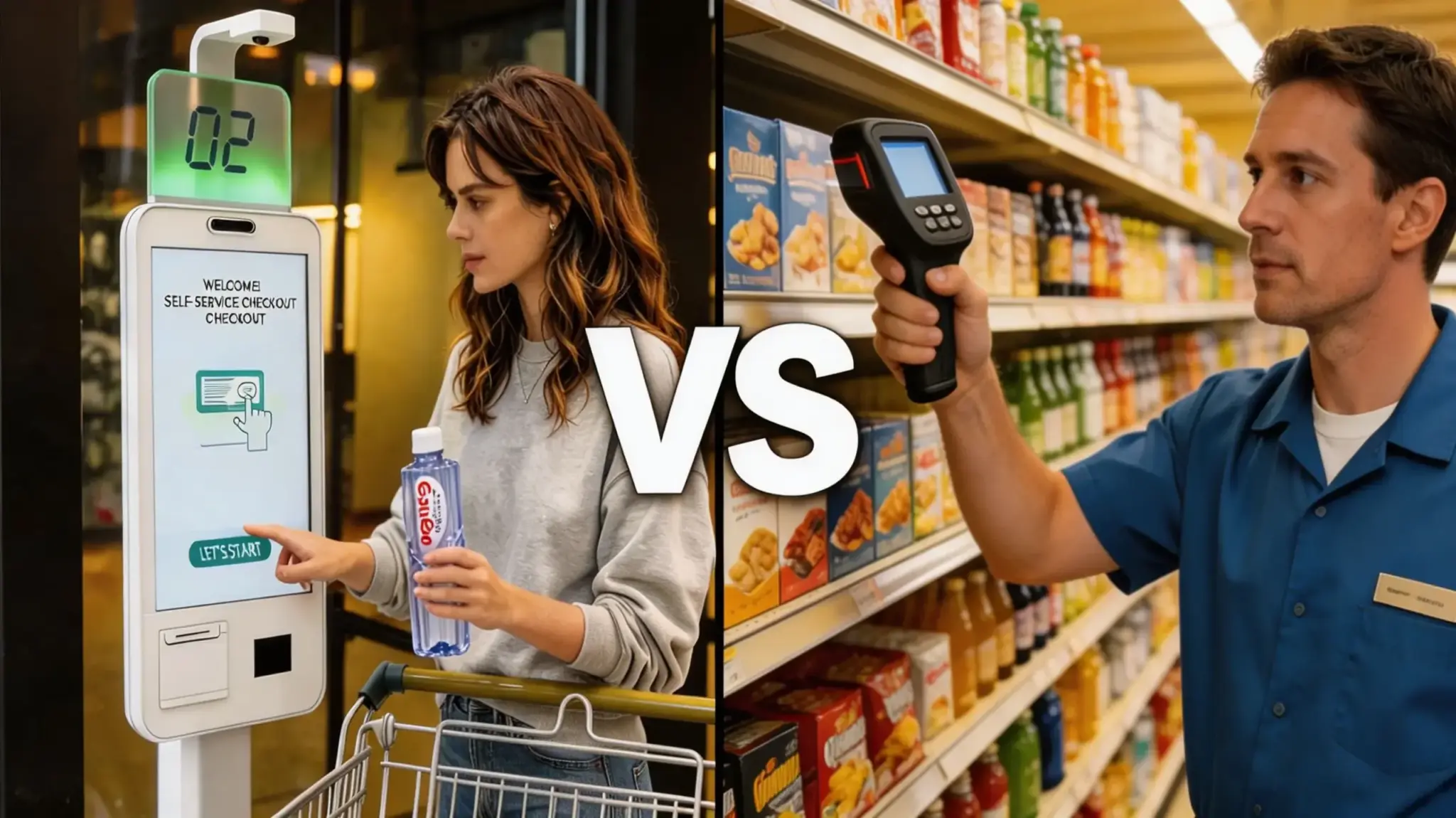
Have you ever had this experience when shopping at a supermarket or convenience store? While using the self-checkout, you get flustered and miss scanning an item. Either you get stopped by the alarm and feel embarrassed to the point of wanting to dig your feet into the ground, or you only realize it after leaving the store. There are also some people who take advantage of the situation,
deliberately not scanning high-priced items or swapping them with low-priced barcodes, causing the store to suffer losses for no reason.
In fact, behind this, there lies a major “hidden pain point” in the retail industry – cashiering losses. Without data, we wouldn’t know that the average loss rate in China’s retail industry is about 0.31%, and in some supermarkets, it even reaches as high as 0.76%. Nearly half of these losses come from the cashiering process! With the increasing popularity of self-checkout and unmanned checkout, this kind of loss has become even more severe. Fortunately, AI technology has come to the rescue. Today, let’s talk about some practical cases of AI cashiering loss prevention in plain language that everyone can understand.
1. let me vent: Traditional cash register anti-theft measures are really too “useless”.
Before the advent of AI, merchants’ efforts to prevent losses were a real “thankless task”. Let’s talk about the anti-theft methods that supermarkets have used over the years. You’ve surely seen them all:
The most common one is “human surveillance”, where loss prevention staff patrol the self-checkout area, their eyes wide open like copper bells, just to catch those who forget to scan or deliberately skip items. But think about it, one person can only keep an eye on four or five machines at most. During peak hours, when the store is crowded, it’s like trying to catch fish in a sea. Moreover, it all depends on human judgment. Minor omissions in scanning are hard to spot, and when it comes to more covert malicious scanning, they are completely helpless. The accuracy rate is less than 30%. What’s even more troublesome is that loss prevention staff are not cheap, and the annual cost is a significant expense. Merchants can only cry “we can’t afford it”.
Later, they tried “high-tech” solutions like weight sensors and barcode verification, but they were even more useless. Weight sensors require daily input of product weights. Adding a new product means a lot of extra work, and they can’t detect barcode swapping. Barcode verification can only check scanned barcodes, and it can’t detect unscanned items. Even more embarrassing is that these devices are prone to false alarms. During peak hours, the alarm sounds non-stop, and staff are busy apologizing and checking, while customers are extremely annoyed, ruining the shopping experience.
The most crucial issue is that loss data is all recorded manually, and mistakes and omissions are common. Merchants have no idea where the losses occur or which products are involved. They can only guess and act blindly. It wasn’t until AI-based anti-theft solutions came along that this long-standing problem was truly resolved.
2. Real-life Cases of AI Cashiering for Loss Prevention: 4 Different Business Models, All Practical
Perhaps someone will ask, is AI loss prevention really that powerful? Don’t worry, let’s take four common retail scenarios as examples and use real cases to explain. There are no obscure terms, all are plain language.
Case One: Large Supermarkets | Winmore Digital’s AI Solution, Deployed in 10 Minutes, Reduces Losses by 70%
When shopping at large supermarkets, the self-checkout lanes are always crowded, and it’s common for customers to accidentally miss scanning items, especially high-priced items like durians. Before installing the AI loss prevention system, a large chain supermarket in East China lost 1,200 yuan per day at each self-checkout area, amounting to a loss of 438,000 yuan annually. Despite hiring eight loss prevention staff, the results were unsatisfactory.
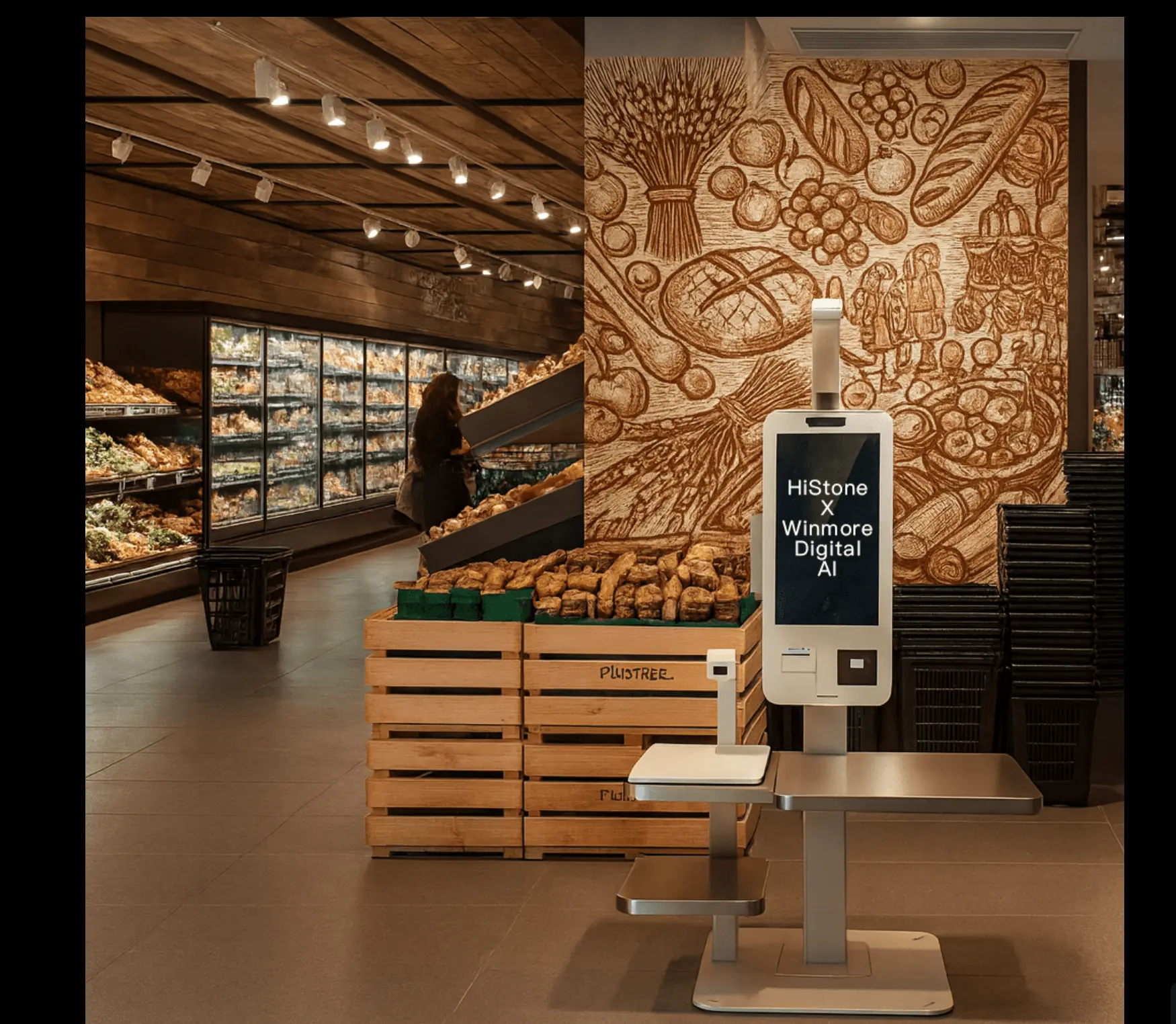
Later, they collaborated with Shanghai Winmore Digital and installed the AI self-checkout loss prevention system. The most surprising part was the simplicity of the installation – just attach a mobile phone-sized AI camera to the top of each self-checkout machine, plug in a USB interface, and it’s ready to use. Each device can be installed in just 10 minutes without modifying the existing checkout system or adding extra hardware. It’s truly “plug and play”.
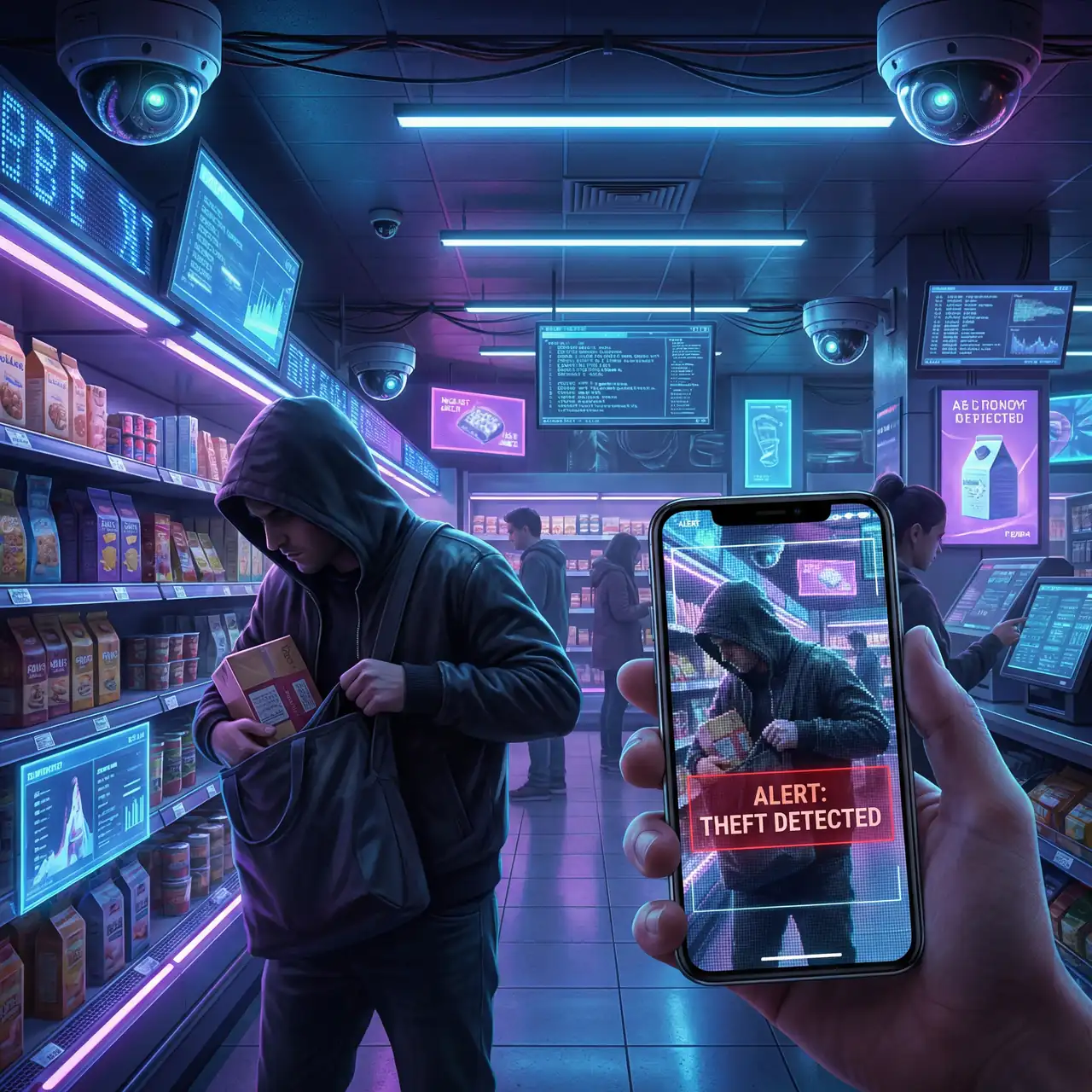
The system’s “eyes” are extremely sharp, accurately monitoring customers’ scanning actions. Whether it’s an unintentional omission, a missed scan due to hand movement, or deliberate barcode swapping or false scanning, it can detect them all at a glance. Moreover, it’s very “intelligent” and won’t give false alarms – waving to ask questions won’t trigger an alarm, and scanning a mobile payment code will automatically mute the system. It neither delays the checkout process nor embarrasses customers.
Once a missed scan is detected, the self-checkout machine’s screen will immediately pop up a prompt: “Your item was not scanned. Please scan again”, guiding customers to correct the mistake themselves. If someone intentionally misses scans or does so repeatedly, the system will trigger an audio-visual alarm and send a message to the loss prevention staff, allowing them to quickly come and handle the situation. Additionally, managers can use a mobile app to view real-time loss data and access surveillance footage, making it clear where the losses occur.
How effective is it? After deployment, the self-checkout area’s loss rate dropped from 1.2% to 0.36%, resulting in a daily loss of only 360 yuan and saving 310,000 yuan annually. The number of loss prevention staff was reduced from eight to four, saving another 96,000 yuan annually. Now, this supermarket has installed this system in over 30 stores nationwide, recovering a total of over 9.3 million yuan in losses. It’s safe to say that AI loss prevention is truly valuable.
Case Two: Chain Convenience Stores | AI Loss Prevention Solution, Reusing Existing Equipment, Saving Money and Worry-Free
24-hour convenience stores are becoming increasingly convenient, and many have switched to unmanned checkout. However, without human supervision, the problem of losses has become more severe. A national chain convenience store, when piloting unmanned checkout, lost 500 yuan per store per day, with a loss rate as high as 1.8%. Especially for small items like snacks and beverages, they were often stolen or not scanned, and without on-site personnel, it was impossible to trace the losses after they occurred. The pilot project was almost halted.
Later, they installed an AI loss prevention system. The most convenient feature is that it can reuse the existing surveillance cameras in the stores without the need for additional equipment. All that is required is to upgrade the software and optimize the algorithm. The hardware upgrade cost for a single store is less than 2,000 yuan, which is much cheaper than installing new equipment.
This system can monitor the entire shopping process of customers, from picking up items, scanning, to payment and leaving. Every step is clearly visible. If a customer scans an item but tries to leave without paying, the system will immediately sound an alarm and send a message to the management. The management can remotely remind the customer to pay via voice. If there is malicious theft or repeated missed scans, the system will save high-definition surveillance footage for subsequent verification.
After one month of piloting, the results were evident: daily losses dropped from 500 yuan to 120 yuan, the loss rate decreased to 0.43%, and the theft and missed scanning of small items reduced by over 80%. This saved 130,000 yuan in losses per year. Moreover, there was no need to hire loss prevention staff, saving an additional 60,000 to 80,000 yuan per year. The return on investment directly doubled. Now, this convenience store has implemented unmanned checkout in over 100 stores nationwide, providing convenience to customers while saving a significant amount of money.
Case Three: Fresh Food Market | AI Loss Prevention, Specializing in Preventing Fresh Food from Being Scanned Overlooked or Barcode Swapped
Loss prevention in fresh food markets is more challenging than in supermarkets – vegetables and fruits have irregular shapes, barcodes are prone to falling off, and after weighing, there are many cases of items being overlooked or having their barcodes swapped for lower-priced ones. A large fresh food market, before installing an AI loss prevention system, was losing 800 yuan per day at the checkout counter, with 85% of the losses coming from fresh food items. Manual loss prevention and gravity sensors were ineffective.
Later, they installed a dedicated AI checkout loss prevention system that was optimized for fresh food items. The camera can accurately identify the shapes of fresh food items at close range, even if the vegetables are wilted or the fruits are bruised, or if the barcodes have fallen off. It can accurately identify the types and prices of the items and will not overlook or mis-scan items due to irregular shapes.
It can also identify two common tricks: one is overlooking items, and it can tell whether the items in the customer’s hands have been scanned regardless of whether they have barcodes or not; the other is barcode swapping, where high-priced fresh food items’ barcodes are swapped for lower-priced ones. The system can immediately compare and alert the cashier to check. What’s more considerate is that it only focuses on the items and not the customers’ faces, automatically blurring the customers’ identity information to protect their privacy and not making them feel offended.
After deployment, the results were immediate: daily losses dropped from 800 yuan to 180 yuan, the loss rate dropped to 0.34%, and the cases of fresh food items being overlooked or having their barcodes swapped decreased by more than 85%. It could save 226,000 yuan in losses per year. Moreover, the false alarm rate was less than 3%, ensuring the loss prevention effect without affecting the shopping experience of customers. The store’s customer traffic increased by 12%.
Case Four: Chain Drugstores | AI Loss Prevention: Reducing Losses and Ensuring Compliance
The items in drugstores are mostly small, such as cold medicine and vitamin tablets, which are small in size but high in price, making them prone to being missed at the checkout or stolen. Moreover, some prescription drugs can only be sold with a prescription. If they are sold to someone without a prescription, the store will face compliance risks. A national chain drugstore, before installing the AI loss prevention system, was losing 300 yuan per day per store, with over 70% of the losses due to missed scans or theft of small items. The compliance risk was also a major concern.
The AI checkout loss prevention system they installed was specifically optimized for the characteristics of drugstores – small high-definition cameras were installed at the checkout counter, focusing on small items. Even if the barcode was hidden, it could still be clearly seen whether it was scanned or not. It also connected to the drugstore’s product database, enabling quick differentiation between prescription and non-prescription drugs.
If someone missed scanning or stole a small item, the system would immediately sound an alarm and save surveillance evidence. If the cashier scanned a prescription drug, the system would automatically remind them to check the prescription. If there was no prescription, the checkout would be paused, and a message would be sent to the management, completely avoiding compliance risks. In addition, it could monitor the cashier’s operations to prevent intentional missed scans or embezzlement of cash, helping the store manage its employees.
After deployment, the daily loss per store dropped from 300 yuan to 75 yuan, with the loss rate falling to 0.3%. The missed scans and theft of small items decreased by more than 80%. The situation of illegal sales of prescription drugs was completely eliminated, and the compliance risk was completely resolved. Customer trust increased, and the repurchase rate rose by 15%.
3. Advantages of AI Cashier Loss Prevention: Easy to Understand for Ordinary People, Beneficial for Merchants
After reading the above cases, I believe everyone can see that the core reason why AI loss prevention can replace traditional methods is that it is “easy to use, cost-effective, and worry-free”. To sum up, there are six advantages, explained in plain language without the need to remember professional terms:
First, accurate identification, with few “slip-throughs”. The “eyes” of AI are much sharper than those of humans, with an identification accuracy rate of over 90%. Whether it’s accidental missed scans, incorrect scans, or malicious scans, barcode swaps, it can accurately detect them, making it much more reliable than manual loss prevention.
Second, saves manpower and reduces costs. AI can work 24/7 without breaks or salary payments. One manager can monitor multiple machines and stores. For instance, with the solution from Winmore Digital, one loss prevention officer can monitor eight self-checkout machines, significantly reducing labor costs.
Third, no disruption, good experience. AI does not make false alarms and does not infringe on customer privacy. It neither slows down the checkout process nor embarrasses customers. Both merchants and customers can benefit.
Fourth, clear data, easy to manage. AI can automatically collect loss data, making it clear which links and which products have higher losses. Merchants no longer have to blindly work based on experience but can precisely identify the pain points of losses and take targeted measures.
Fifth, strong adaptability, applicable everywhere. Whether it’s large supermarkets, convenience stores, fresh food markets, or pharmacies, AI loss prevention can be optimized according to the scene, adapting to different products and checkout modes, with extremely strong versatility.
Sixth, quick deployment, no hassle. For instance, with the solution from Winmore Digital, one device can be installed in just 10 minutes, without the need to modify the existing system, and it does not affect the normal operation of the store. Merchants do not need to spend a lot of time and energy on deployment.
4. To be honest: AI Loss Prevention, a Promising Future
For merchants, cash register losses may seem like a minor issue, but they can add up to a significant expense over time. The advent of AI-powered cash register loss prevention is like giving merchants a pair of “intelligent eyes,” solving the loss problem, saving on labor costs, and enhancing the customer experience all at once.
From self-checkout in large supermarkets to unmanned checkout in convenience stores, and even precise loss prevention in fresh food markets and pharmacies, AI loss prevention has integrated into every aspect of our lives. As AI technology becomes more mature, its recognition accuracy and adaptability will continue to improve. In the future, more merchants will adopt AI loss prevention, benefiting both merchants by reducing losses and customers by providing a smoother shopping experience.
Some may worry that AI loss prevention is expensive. However, solutions like those from Winmore Digital are easy to deploy, have controllable costs, and offer a high return on investment. Many solutions can also reuse existing equipment, further reducing costs. Whether it’s large chains or small stores, they can all afford it.
In conclusion, AI cash register loss prevention is not some “high-tech” black magic but a practical tool that genuinely helps merchants solve problems and improves the customer experience. It won’t be long before we no longer feel embarrassed when we forget to scan items while shopping in supermarkets or convenience stores, and merchants can finally be free from the burden of losses, achieving a win-win situation.