TL;DR
Retail theft, particularly at self-checkout kiosks, is costing the industry over $100 billion annually. Retail AI security is transforming loss prevention from reactive observation to proactive, real-time intervention. For Retail ISVs and hardware manufacturers, integrating AI transaction monitoring directly into POS systems via lightweight APIs and SDKs is no longer a luxury—it’s a necessity. This guide explores how AI visual recognition prevents shoplifting, barcode swapping, and checkout fraud, helping retailers reduce shrinkage by up to 80% without compromising the frictionless shopping experience.
1. What is AI Retail Security?
Retail AI security refers to the deployment of artificial intelligence—specifically computer vision, machine learning, and data analytics—to protect physical retail environments from shrinkage, fraud, and operational inefficiencies. Unlike traditional CCTV that relies on human monitoring post-incident, AI retail security systems act as an autonomous, real-time loss prevention agent.
For modern retailers, retail security AI bridges the gap between physical store activity and digital transaction data. By analyzing customer behaviors, identifying merchandise, and correlating visual data with Point of Sale (POS) inputs in milliseconds, these systems can instantly flag anomalies. As frictionless commerce and self-service checkout continue to grow, AI provides the essential safeguard to ensure that speed and convenience do not come at the expense of profitability.
2. Why Retail Needs AI to Combat Shrinkage
The retail landscape is facing a crisis of shrinkage, driven largely by the very technologies designed to improve customer experience. According to the National Retail Federation (NRF), retail shrink represents over $112 billion in losses annually. The challenge is most acute at the self-checkout (SCO) lane.
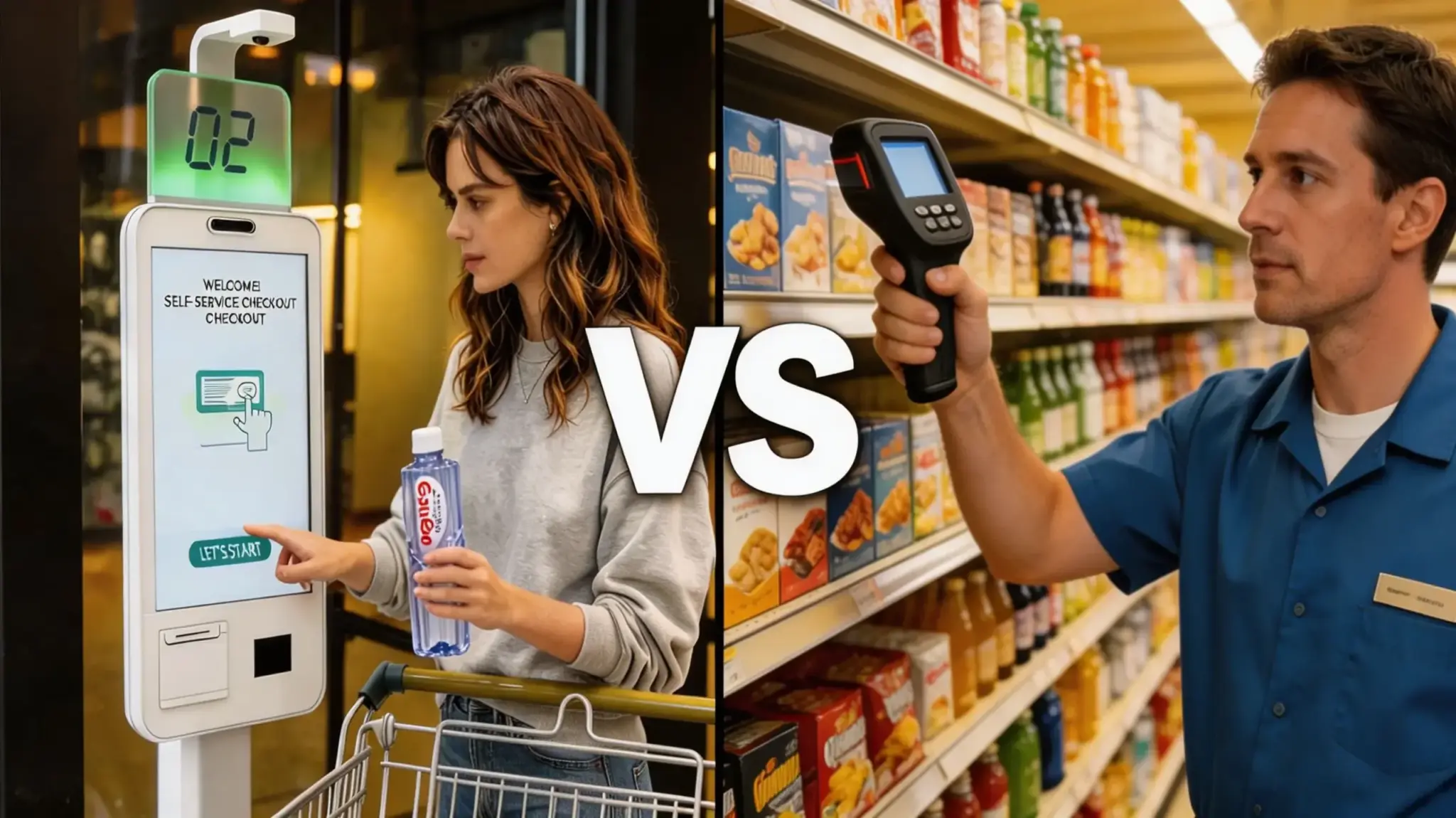
Recent industry data reveals that self-checkout machines see up to 4 times as much shrinkage as traditional cashiers. While 86% of consumers use self-checkout machines, statistics show theft increases by up to 65% at self-checkout compared to a traditional checker. The pain points for retailers are clear and quantifiable:
- Self-Checkout Missed Scans (Accidental & Intentional):
- Research shows that 36% of self-checkout thefts are accidental (the shopper fails to notice when an item does not scan), yet 15% of users confess to purposely stealing. The “pass-around” or simply leaving high-value items in the cart accounts for a massive portion of retail theft.
- Barcode Swapping & Ticket Switching:
- Thieves have become sophisticated, often replacing the barcode of a high-ticket item (like electronics or premium meats) with one from a low-cost item (like bananas). Traditional weight-based security scales are easily fooled by this tactic if the weights are similar.
- Organized Retail Crime (ORC) & Shoplifting:
- Retailers reported a 93% increase in annual shoplifting incidents in 2023 compared to 2019. Shoplifting AI is desperately needed to identify coordinated “snatch-and-grab” events and repeat offenders across multiple store locations.
Relying on a single store associate to monitor 6-8 self-checkout terminals is an impossible task. The industry needs intelligent systems that can automate the vigilance process.
3. How AI Prevents Retail Theft
The true power of retail AI security lies in its multi-layered approach to loss prevention. Here is how modern AI systems are dismantling retail theft.
3.1 AI Shoplifting Detection
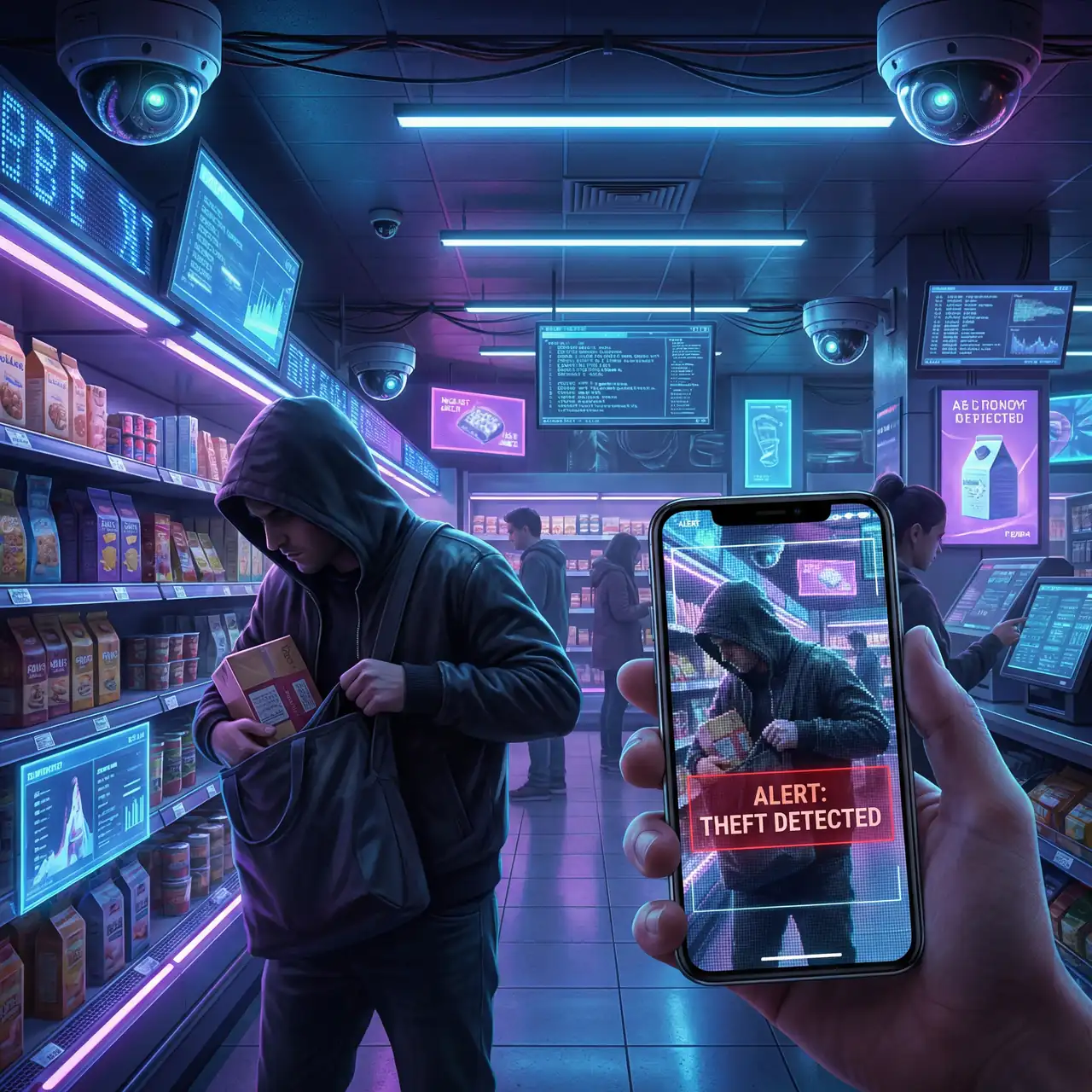
Traditional security cameras only record crimes; AI shoplifting detection cameras actively prevent them. By utilizing 3D depth-sensing and RGB cameras, these systems monitor the physical space of the store. They can identify suspicious behaviors such as concealment (putting items directly into pockets or bags) or loitering in high-risk aisles. When integrated with store management, AI theft detection retail systems can alert staff to intervene before the suspect even reaches the exit.
3.2 AI Transaction Monitoring
This is the critical frontline against shrinkage. AI transaction monitoring directly correlates the physical action of scanning an item with the digital POS receipt.
- How it works: Our iDetector logic utilizes dual-lens (RGB + Depth) cameras mounted above the scanner. When a hand enters the “Action Detection Area,” the system tracks the movement. If an item passes the scanner but no barcode is registered in the POS within a set timeframe (e.g., 400ms), the system instantly flags a “Missed Scan.”
- Link——How AI Loss Prevention Tools iDetector Enhancing Retail Security
- Preventing Fraud: For barcode swapping, the system compares the visual CNN (Convolutional Neural Network) features of the scanned item against the cloud database of the scanned barcode. If a customer scans a $1 barcode but the camera sees a $50 bottle of wine (similarity score < 0.8), the AI fraud detection for retail system triggers an immediate alert, pausing the transaction.
3.3 AI Recognition Technology
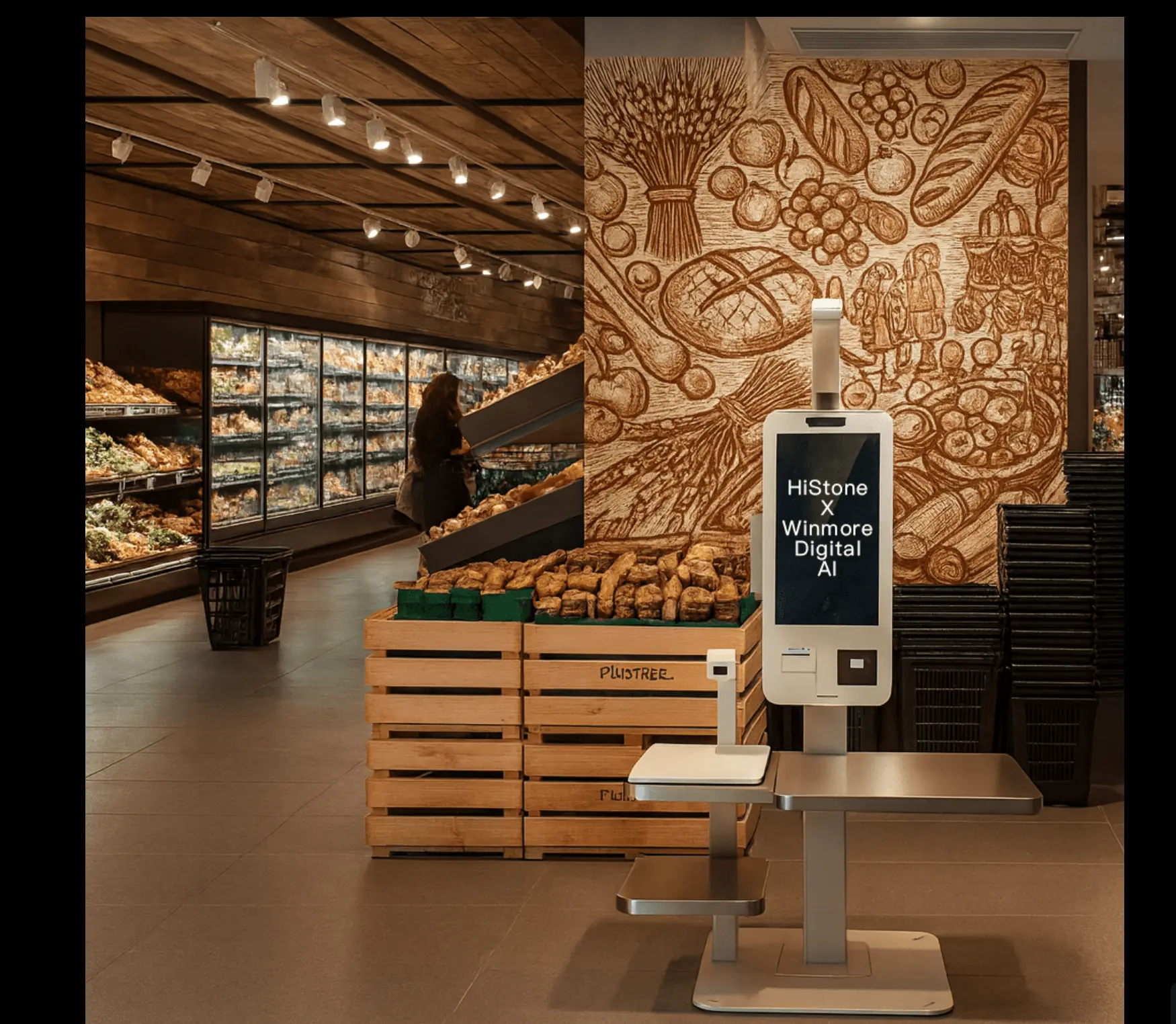
Weight scales at self-checkouts are frustrating for customers and easily manipulated by thieves. AI recognition retail theft solutions replace heavy, expensive scales with visual intelligence. By automatically identifying fresh produce, bakery items, and un-barcoded goods, AI recognition speeds up the checkout process while ensuring the correct item is billed. It effectively solves the “same weight, different price” vulnerability.
3.4 AI Security Monitoring Systems
Beyond the checkout, comprehensive AI security monitoring aggregates data across the entire store network. These AI retail security systems provide loss prevention teams with actionable dashboards, highlighting peak times for theft, identifying vulnerable store layouts, and tracking the financial value of intercepted merchandise.
4. AI Tools for Retail Security
For ISVs and hardware vendors looking to upgrade their offerings, selecting the right ai tools for retail security is crucial. The market demands solutions that are not just accurate, but also easy to deploy.
- API & SDK Integration:
- The best ai tools to stop retail theft offer seamless integration. For example, systems that provide Android AAR packages or Windows WebSocket/HTTP APIs allow POS software developers to embed visual AI without rewriting their core checkout logic.
- Lightweight Edge Computing:
- Not every retailer can afford high-end GPU servers. Leading AI tools are optimized to run on standard POS hardware (like J1900 or RK3288 processors), utilizing less than 20% of CPU resources while delivering >90% accuracy.
- Dual-Mode Operation:
- Flexible tools offer both an “Integration Mode” (where the POS controls the UI alerts) and a “Non-Integration Mode” (where the AI software runs independently and overlays alerts directly on the screen), ensuring compatibility with legacy systems.
Explore our guide on the Best AI Tools for Retail Security to learn how to choose the right tech stack for your retail clients.
5. How to Reduce Retail Theft with AI
Implementing AI doesn’t have to be a massive, disruptive IT project. Here is how ISVs can help retailers reduce retail theft ai-style in three straightforward steps:
Step 1: Deploy Lightweight Visual Systems
Install plug-and-play USB dual-lens cameras above existing self-checkout kiosks. Because the AI processes video at the edge (directly on the POS machine), there is no need for complex network rewiring or heavy cloud computing costs.
Step 2: Integrate with the POS System
Using our standardized SDKs, integrate the AI transaction monitoring module into your existing POS software. Define the “Item Detection Area” and set custom thresholds for missed scans and product mismatches based on the store’s specific environment.
Step 3: Enable Real-Time Intervention
Configure the system to trigger immediate, on-screen pop-ups and voice prompts (e.g., “Item not scanned”) when an anomaly is detected. This frictionless intervention corrects 80% of accidental missed scans instantly, while deterring intentional theft without requiring immediate staff confrontation.
By integrating solutions like the iDetector AI module, hardware and software providers can offer a built-in loss prevention feature that delivers an immediate ROI for their retail clients.
6. Ideal Application Scenarios
Our AI retail security architecture is designed for maximum adaptability across various retail environments:
- Supermarkets & Hypermarkets: Handling massive SKU counts and high-volume traffic. The AI effectively manages fresh produce recognition and prevents barcode swapping on high-value meats and alcohol.
- Convenience Stores: Operating with minimal staff. The system acts as a virtual loss prevention officer, allowing a single employee to manage the floor while the AI secures the self-checkout zone.
- Self-Checkout Kiosks & Smart Carts: Perfect for hardware manufacturers building the next generation of SCOs. Our AI module seamlessly embeds into new kiosk designs, replacing bulky weight scales with sleek, camera-based verification.
7. Conclusion
The era of relying on weight scales and randomized receipt checks is over. Retail AI security is the new standard for protecting profit margins in an increasingly frictionless retail world. By embedding visual AI and transaction monitoring directly into the checkout process, retailers can stop theft exactly where it happens.
For ISVs, POS developers, and hardware manufacturers, integrating these AI capabilities is the key to delivering the next generation of retail technology. Don’t let your clients lose another dollar to checkout shrinkage.
Ready to upgrade your POS systems with cutting-edge AI loss prevention?
👉 Request a Demo today.
👉 Contact our Integration Team for API documentation.
👉 Consult with our Solution Experts to see how easily AI can fit into your hardware.
FAQ: AI Retail Security
What is AI retail security?
AI retail security uses artificial intelligence, computer vision, and machine learning to monitor retail environments, analyze customer behavior, and integrate with POS data to prevent theft, fraud, and inventory shrinkage in real-time.
How does AI detect shoplifting?
AI detects shoplifting by analyzing video feeds to identify suspicious kinematics (like hiding items in clothing) or by monitoring the checkout process to ensure every item that passes through the scanning area is successfully registered in the POS system.
Can AI prevent checkout fraud?
Yes. AI prevents checkout fraud by using computer vision to verify that the physical item being scanned matches the barcode data in the system. If a customer swaps a barcode from a cheap item onto an expensive one, the AI detects the visual mismatch and halts the transaction.
Is AI retail security difficult to integrate?
No. Modern AI retail security solutions offer standardized APIs, SDKs, and WebSocket connections, allowing Independent Software Vendors (ISVs) to easily embed visual AI capabilities into existing POS software and hardware with minimal coding.