
table of contents
- Trends in AI Self-Service Cashiering Loss Prevention
- Trend 1: Real-Time Intervention Overtakes Video
- Trend 2: Lightweight Deployment Becomes Standard
- Trend 3: Data-Driven Operations Replace Basic Rules
- Trend 4: Self-Checkout is the Core Battleground
- Trend 5: Upgrading to a Profit Protection System
- Trend 6: Data Privacy as a Basic Requirement
- Conclusion: Which AI Systems Will Survive?
- Trends in AI Self-Service Cashiering Loss Prevention
Trends in AI Self-Service Cashiering Loss Prevention
Retail shrinkage is not a minor issue. According to the National Retail Federation (NRF), the average shrinkage rate in the US retail industry remains around 1.4%. This is not just an abstract number; it represents real profits being swallowed up daily.
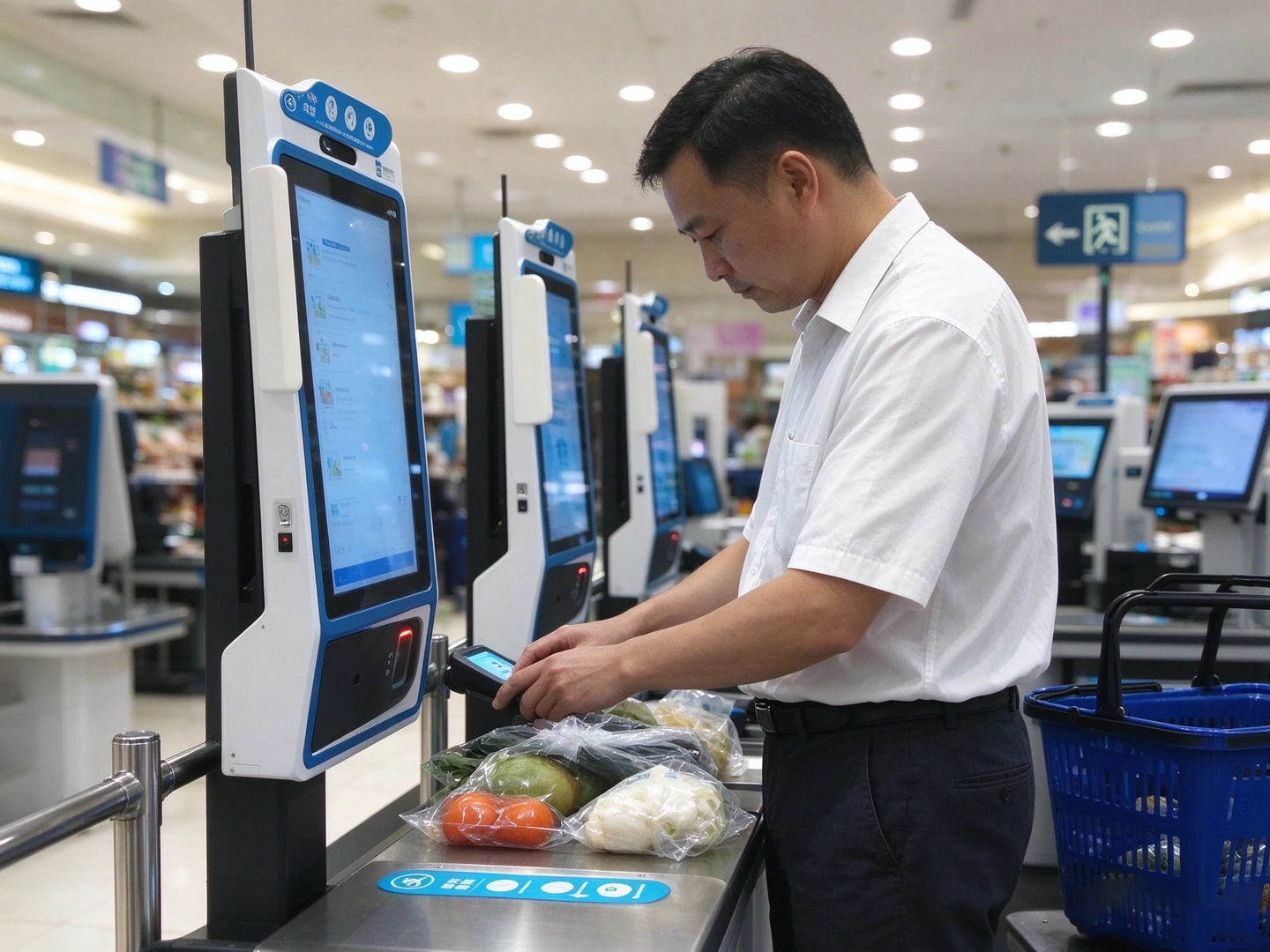
As automated checkouts become widespread, AI self-service cashiering combined with loss prevention technology is evolving. It is no longer just a basic “theft prevention tool.” Instead, it is a key capability that directly protects a store’s profit structure.
The industry is shifting from passive post-event video reviews to active, real-time value creation. Here is a breakdown of the top six trends shaping the future of retail security.
Trend 1: Real-Time Intervention Overtakes Video
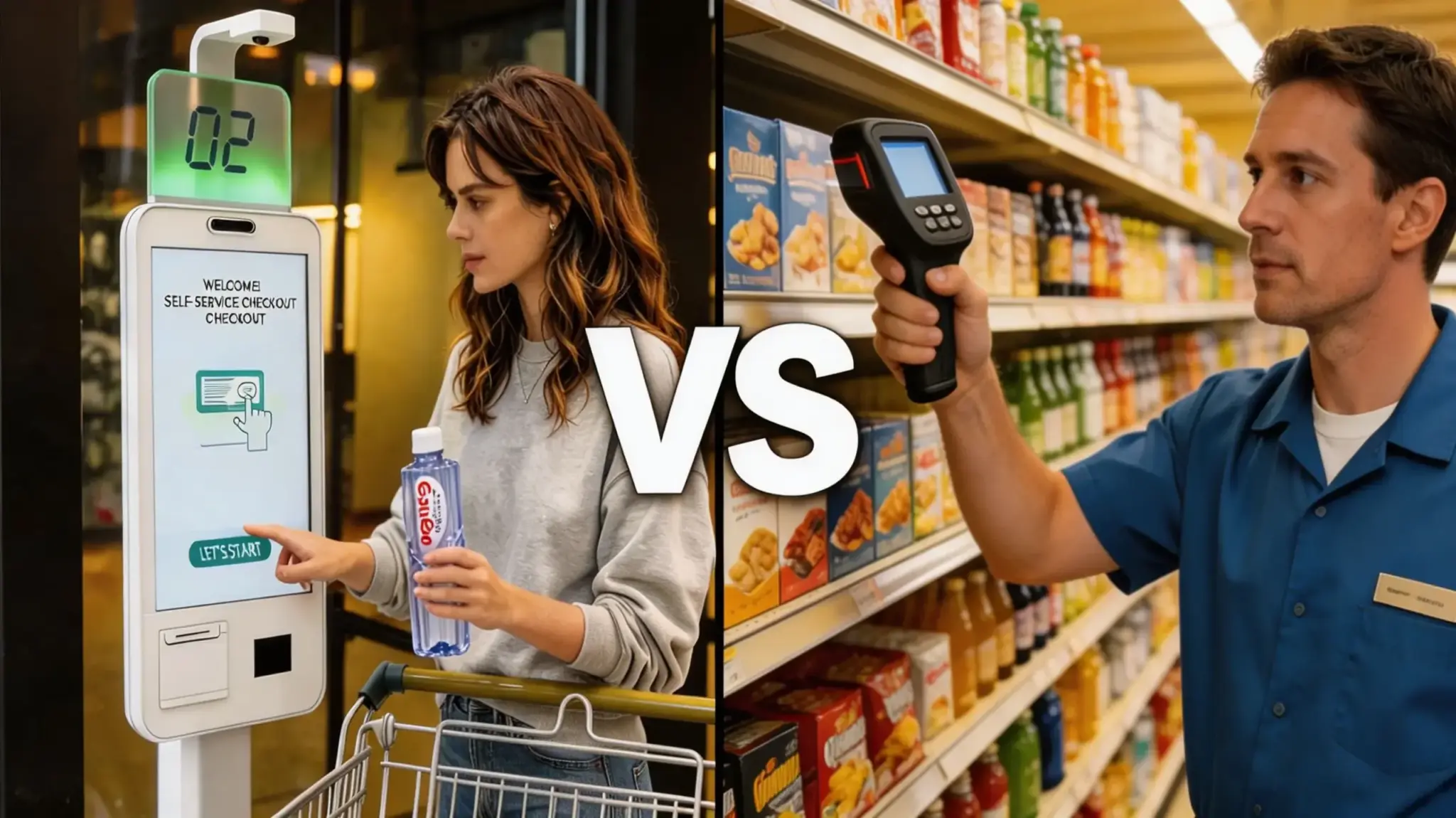
In the past, the logic of loss prevention was simple: wait for a problem, check the security video, and identify the person. The flaw in this method is obvious—by then, the money is already lost.
The core of future AI self-service cashiering lies in real-time recognition. Truly valuable systems will offer:
Instant detection of missed scans, incorrect barcode scans, and under-scanned items.
Gentle on-screen reminders during the transaction.
Clear guidance allowing customers to correct their own mistakes.
This “flexible intervention” is crucial because most missed scans are operational errors, not malicious theft. A mature system avoids loud, embarrassing alarms. Instead, it uses pop-up screens and voice prompts. This real-time interception is the ultimate key to effective loss prevention.
Trend 2: Lightweight Deployment Becomes Standard
Many retailers hesitate to adopt new AI tools due to high remodeling costs. The future of AI loss prevention demands a “lightweight transformation.”
To scale successfully, the new system must:
Keep your existing cash register software intact.
Reuse current store cameras instead of requiring massive hardware additions.
Utilize local edge computing boxes that install in hours, not days.
A system must be fully compatible with mainstream POS setups and process data locally without relying entirely on cloud training. If an AI tool disrupts store traffic or requires heavy rewiring, large retail chains will not adopt it.
Trend 3: Data-Driven Operations Replace Basic Rules
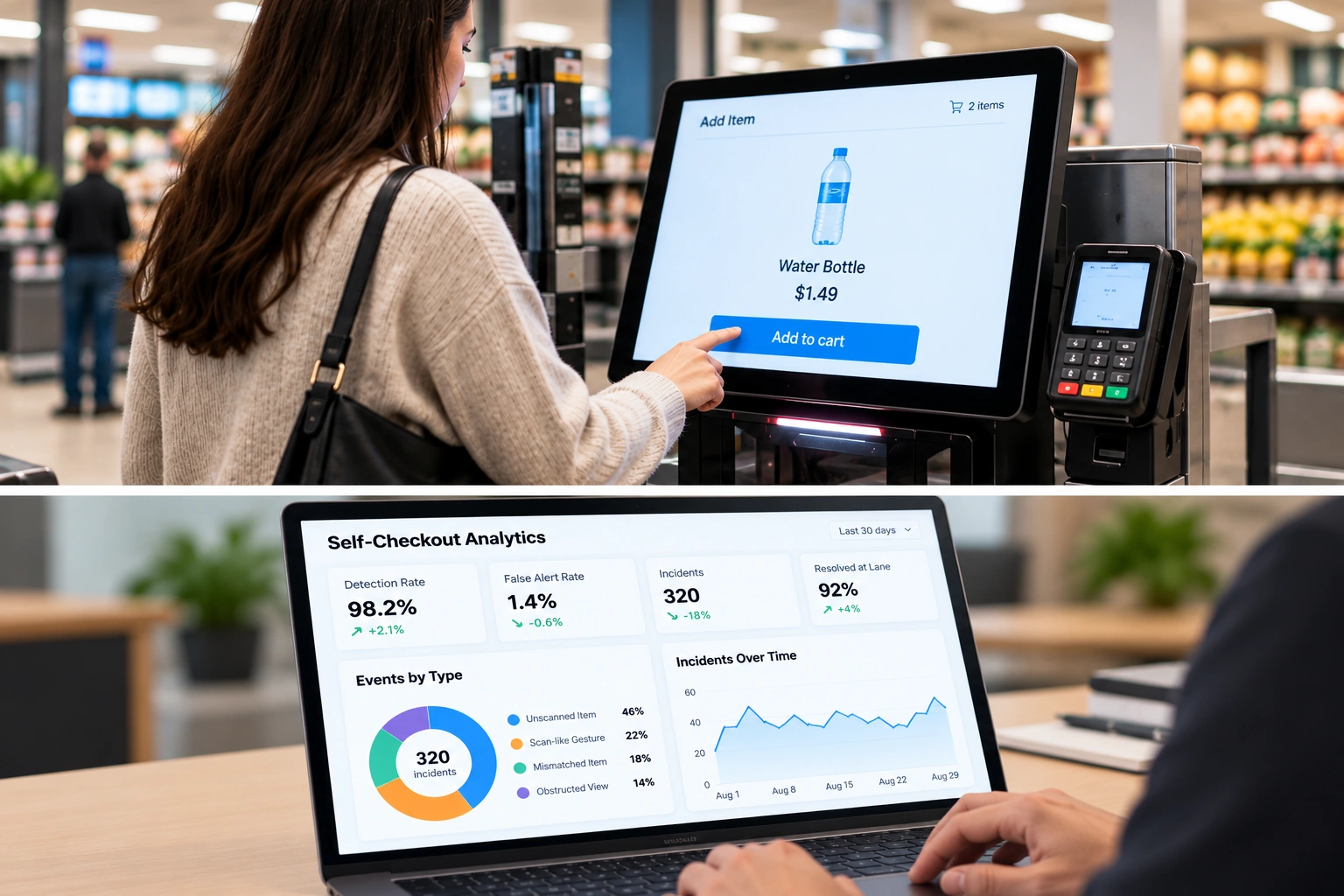
AI loss prevention will do much more than simply “detect anomalies.” Its true power lies in data accumulation and analysis.
Future systems will automatically track:
Which specific products (SKUs) have the highest missed-scan rates.
Which time periods experience unusual spikes in checkout errors.
Which high-value items are frequently swapped with cheaper barcodes.
Stores will use this data for reverse optimization. Managers can adjust product displays, secure high-loss items, and improve employee training. The system shifts from a simple monitor to a core business decision-maker.
Trend 4: Self-Checkout is the Core Battleground
The NRF reports that retail shrinkage is intensifying, and the boom in self-checkout lanes is a major factor. The reasons are practical: fewer staff members are present, customers handle scanning themselves, and unintentional errors increase.
Therefore, investing in AI self-service cashiering will be the top priority for retailers over the next few years. The winning systems will be those that can:
Accurately distinguish between a simple “misoperation” and “malicious theft.”
Link directly to the receipt in real-time.
Deeply integrate with the store’s payment gateway.
Basic video surveillance is no longer enough to secure the self-checkout zone.
Trend 5: Upgrading to a Profit Protection System
Retail leaders now realize that shrinkage is not just a security issue; it is a direct attack on net profit.
An AI tool officially becomes a “Profit Protection System” when it delivers:
Real-time transaction interception.
Local AI self-learning for new store products.
Centralized remote management across hundreds of stores.
Actionable loss data analysis.
Zero lag during peak holiday shopping hours.
The future competition is not about who can add the word “AI” to their software. It is about whose system is the most stable, accurate, and scalable under real retail pressure.
Trend 6: Data Privacy as a Basic Requirement
As global data regulations become stricter, compliance is no longer a bonus—it is a mandatory threshold. Large chain enterprises will only purchase AI loss prevention systems that:
Prioritize local computing over cloud processing.
Never transmit raw video footage externally.
Ensure complete data controllability for the store owner.
Implement strict hierarchical permission management for staff.
Conclusion: Which AI Systems Will Survive?
AI loss prevention is here to stay. However, in the next three years, merely having AI won’t be a competitive advantage.
Only systems that offer real-time intervention, lightweight deployment, deep POS adaptation, and robust data analytics will survive. The true divide in the retail industry will be between stores that use basic cameras and those armed with truly effective AI self-service cashiering solutions.